Case Study: WhatsApp Automation & Invoice Intelligence for Cosmetics, Skincare & Personal Care Brands
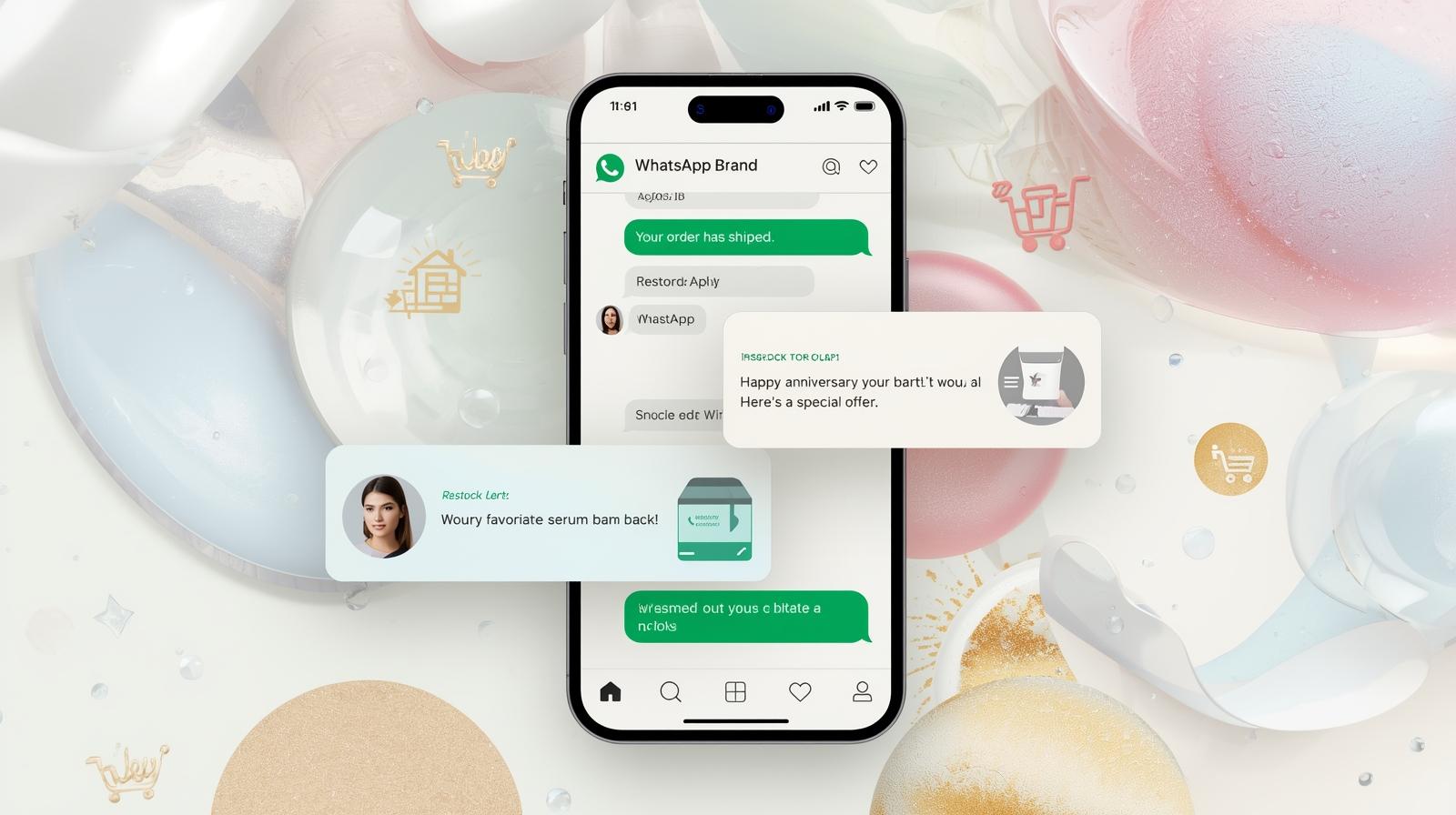
Industry Background & Core Problem
The cosmetics, skincare, and personal care industry is fundamentally built on repeat consumption, routine adherence, and product replenishment cycles. Unlike one-time retail purchases, products such as face cleansers, serums, moisturizers, sunscreens, shampoos, conditioners, and supplements are designed to be used consistently over a defined period typically 30, 45, or 60 days.
From a business perspective, this makes the industry highly predictable in terms of repeat demand. From an operational perspective, however, most brands fail to convert this predictability into structured customer engagement.
How the Customer Lifecycle Actually Works
A typical customer journey in this industry looks like this:
- First purchase driven by discount, influencer, or recommendation
- Product usage period with zero brand interaction
- Product runs out without a reminder
- Customer delays repurchase or switches brands
- Brand attempts a generic win-back campaign
This gap between purchase and replenishment is where most revenue leakage occurs.
The Core Problem Brands Face Today
The real issue is not customer interest—it is lack of transactional intelligence.
Most cosmetics and personal care brands:
- Do not know what product a customer purchased
- Do not know how long the product lasts
- Do not know when replenishment is due
- Do not know which routine the customer follows
- Do not know who is likely to repurchase vs churn
Despite having all this information embedded inside invoices, the data remains unstructured, unused, and invisible to marketing and retention teams.
Why This Problem Is Unique to This Industry
Generic CRM tools treat cosmetics buyers the same way they treat apparel or electronics customers. But skincare and personal care purchases are usage-driven, not event-driven. The absence of routine awareness leads to:
- Low repeat purchase rates after first order
- Overdependence on discounts
- Generic WhatsApp broadcasts that feel irrelevant
- Missed replenishment opportunities
- Poor customer lifetime value growth
This is precisely where WhatsApp Automation for Cosmetics, Skincare & Personal Care industry must be transaction-led, not campaign-led.
Without invoice intelligence and lifecycle automation, brands are essentially guessing when to talk to customers—often too early, too late, or with the wrong message.
Why Traditional Tools Fail
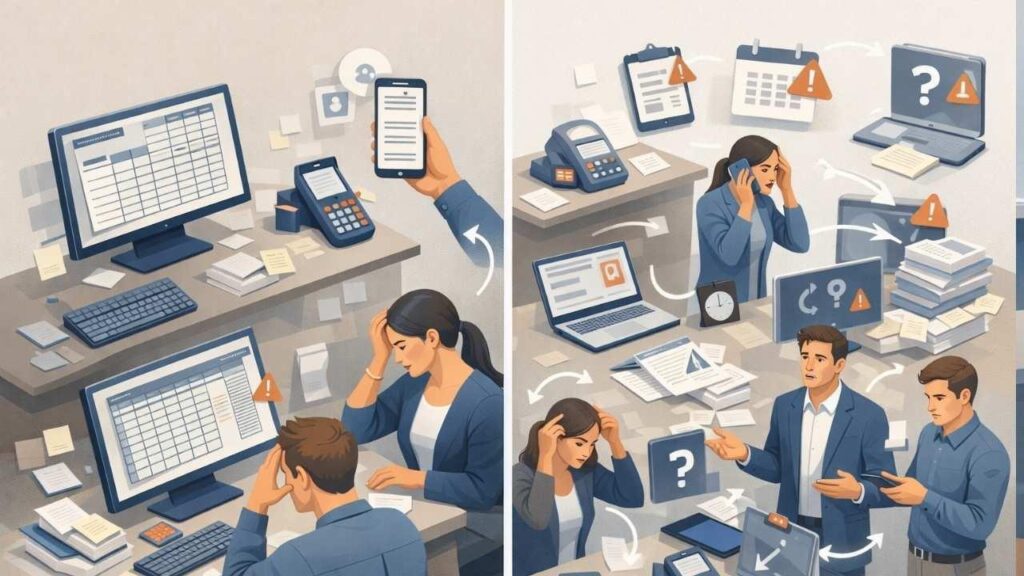
Most cosmetics, skincare, and personal care brands already use a combination of POS systems, CRMs, email tools, and WhatsApp broadcast platforms. On paper, this tech stack looks sufficient. In reality, it is fundamentally misaligned with how this industry operates.
The failure is not due to lack of tools—it is due to lack of contextual intelligence.
CRMs Don’t Understand Product Consumption
Traditional CRMs are designed to store contact details and campaign history. They do not understand:
- How long a cleanser, serum, or sunscreen lasts
- Whether a product is part of a daily routine or occasional use
- Which items require replenishment versus one-time purchase
As a result, CRM-driven messaging is time-blind. Customers receive follow-ups based on arbitrary timelines (7 days, 30 days, 90 days) rather than actual product usage.
For the WhatsApp Automation for Cosmetics, Skincare & Personal Care industry to work, messaging must align with when the product is finishing, not when a campaign calendar says so.
Broadcast WhatsApp Tools Create Noise, Not Value
Most WhatsApp tools used by beauty brands are broadcast-first:
- One list
- One message
- Sent to thousands of customers
This approach ignores:
- Product category differences
- Purchase quantity
- Skin concern or routine stage
- Customer value (first-time vs loyal)
The outcome is predictable:
- Low read relevance
- Declining engagement rates
- Increased opt-outs
- WhatsApp account quality risk
Customers don’t disengage because they dislike the brand—they disengage because the messages are not helpful.
POS Systems Are Transactional, Not Intelligent
POS systems record invoices for accounting and billing. They are not built to:
- Extract product-level intelligence
- Track replenishment cycles
- Trigger lifecycle communication
- Segment customers behaviorally
Invoice data remains trapped inside PDFs and receipts, inaccessible to marketing and retention teams. This disconnect forces teams to rely on manual exports, spreadsheets, and guesswork.
Manual Processes Do Not Scale
Many brands attempt to compensate with manual work:
- Creating WhatsApp lists by hand
- Tagging customers after purchases
- Running ad-hoc campaigns
- Sending reminders inconsistently
This approach breaks down as order volume grows. Human memory cannot scale with thousands of customers, each on a different skincare routine and usage timeline.
The Core Gap Traditional Tools Cannot Fill
Traditional tools fail because they are:
- Campaign-driven instead of lifecycle-driven
- Static instead of behavior-aware
- Manual instead of automated
- Generic instead of contextual
They do not connect invoices to customer behavior, and without that connection, WhatsApp Automation for Cosmetics, Skincare & Personal Care industry becomes just another messaging channel, not a growth engine.
True automation in this industry requires a system that starts with what the customer bought, understands how it is used, and communicates only when it matters.
How Interactions Are Triggered by Real Business Events
For WhatsApp Automation for Cosmetics, Skincare & Personal Care industry to deliver real business impact, customer communication must be anchored to actual business events, not assumptions, schedules, or marketing calendars.
In this industry, the most reliable indicator of customer intent already exists—it is the invoice.
Every Meaningful Interaction Starts With a Transaction
Cosmetics and personal care brands generate transactional documents for every customer action:
- A skincare product purchase
- A bundled routine kit order
- A bulk or repeat purchase
- A partial or unpaid transaction
Each of these events reflects real customer behavior, not inferred interest. Unlike website clicks or ad interactions, invoices confirm:
- What the customer actually bought
- In what quantity
- On which date
- At what value
- With what payment status
This makes invoices the single source of truth for triggering customer engagement.
Why Invoices Are Better Than Behavioral Guesswork
Most automation systems rely on indirect signals such as:
- Page views
- Add-to-cart events
- Email opens
- Campaign clicks
While useful, these signals do not indicate product consumption. A customer may browse skincare products multiple times without needing a refill.
Invoices, on the other hand, answer the most critical questions:
- Which product category is being used?
- How long will it likely last?
- When will replenishment be required?
- Is the customer active, returning, or lapsing?
For WhatsApp Automation for Cosmetics, Skincare & Personal Care industry, transactional certainty is far more valuable than behavioral speculation.
Examples of Real Business Triggers
When automation is event-driven, engagement becomes timely and relevant:
- A cleanser invoice triggers a post-purchase education flow
- A serum purchase triggers a routine usage reminder
- A sunscreen invoice triggers a 30-day replenishment prediction
- A repeat order triggers a loyalty or routine expansion journey
- An unpaid invoice triggers a payment reminder
Each message is sent because something happened, not because a campaign was scheduled.
From Events to Contextual Engagement
By using invoices as triggers, brands move from:
- Random follow-ups → Contextual communication
- Bulk messaging → Individual relevance
- Guesswork → Predictable engagement
This approach ensures customers hear from the brand only when it makes sense, which is essential for maintaining trust on WhatsApp.
In short, WhatsApp Automation for Cosmetics, Skincare & Personal Care industry works best when automation starts with reality—and invoices are the most accurate representation of that reality.

Data Capture Without New Tools
One of the biggest adoption barriers for automation in the cosmetics and personal care space is integration fatigue. Brands are often hesitant to introduce new tools because integrations with POS systems, ERPs, or billing software are expensive, time-consuming, and disruptive to daily operations.
This is where WhatsApp Automation for Cosmetics, Skincare & Personal Care industry fundamentally changes the equation.
Data Is Already Being Created—Waliner Simply Uses It
Every cosmetics brand already generates structured business data through its daily operations:
- Invoices created at checkout
- Billing PDFs shared with customers
- Order summaries sent via WhatsApp or email
- POS-generated receipts stored internally
Waliner does not ask brands to change how this data is created. Instead, it works with existing workflows, capturing data at the point where it already exists.
How Data Enters the System Naturally
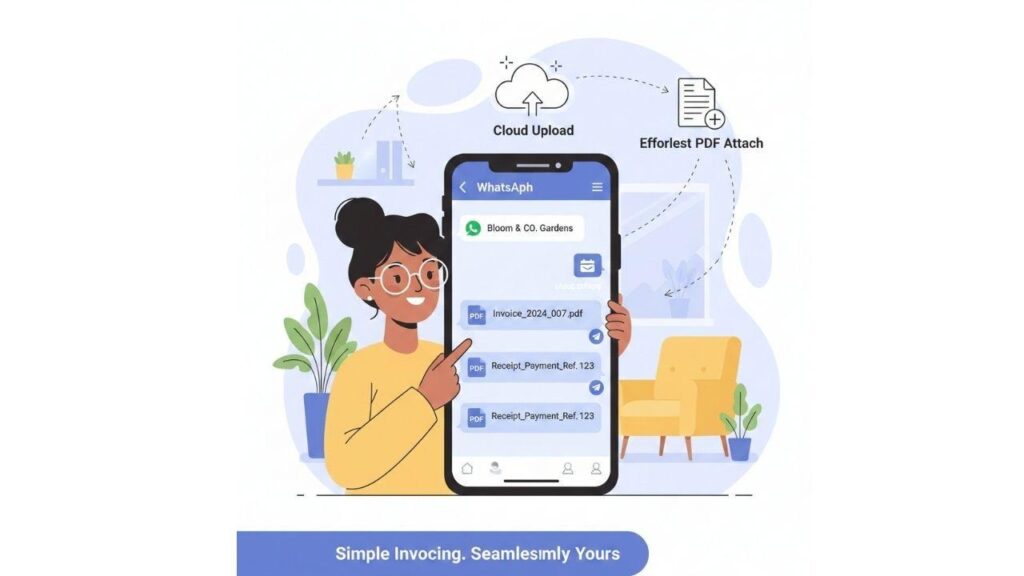
Invoice data can be shared with Waliner through:
- WhatsApp invoice uploads
- PDF uploads via a simple portal
- Bulk invoice imports
- Email-forwarded invoices
There is no need for:
- API integrations
- POS customization
- New software installations
- Staff retraining
For store teams and operators, the process feels invisible. They continue sending invoices as usual, while automation runs silently in the background.
Eliminating Manual Customer Management
Without invoice-based automation, teams are forced to:
- Manually tag customers after purchase
- Maintain WhatsApp lists
- Track repeat buyers in spreadsheets
- Guess replenishment timing
This manual work is not only inefficient but also error-prone. As customer volume grows, these processes collapse under operational pressure.
With invoice-driven data capture, all of this manual effort disappears. Customer profiles, product categories, and lifecycle stages are created automatically.
Why This Matters for Scalability
For WhatsApp Automation for Cosmetics, Skincare & Personal Care industry to scale, data ingestion must be:
- Passive, not active
- Automatic, not manual
- Embedded, not disruptive
By removing integration and training friction, brands can move from experimentation to full-scale automation without slowing down their operations.
In practical terms, this means:
- Faster onboarding
- Lower operational resistance
- Immediate value from existing data
- Automation that grows as the business grows
Real Transformation — From Unstructured Data to Actionable Intelligence
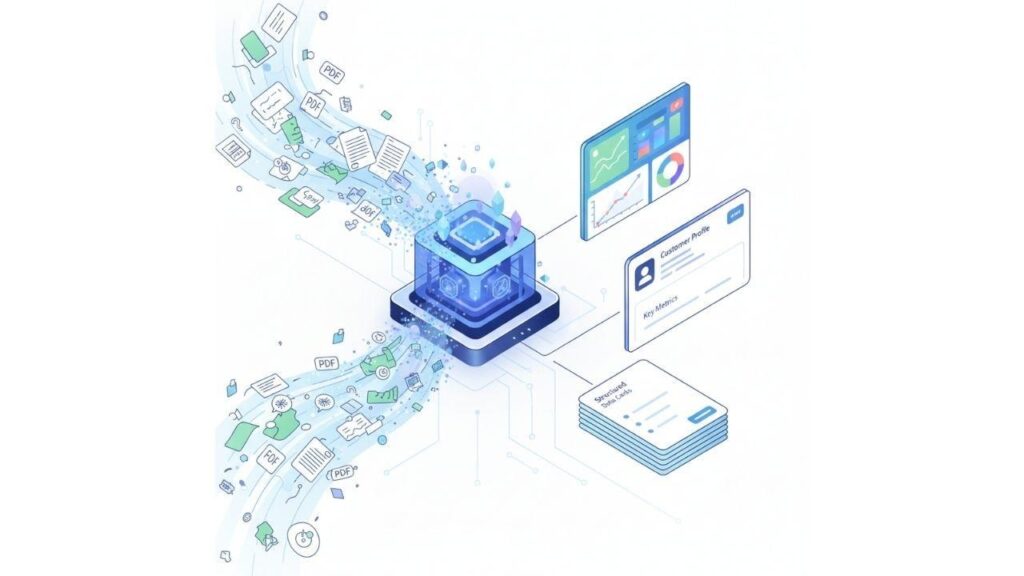
The true power of WhatsApp Automation for Cosmetics, Skincare & Personal Care industry emerges at the moment raw invoices are transformed into structured, decision-ready intelligence. This is the point where automation stops being a messaging feature and becomes a business system.
Why Unstructured Invoice Data Is a Hidden Asset
Every invoice generated by a cosmetics or personal care brand contains rich information, but in its raw form, it is unusable for automation. PDFs and printed receipts are designed for humans, not systems. As long as invoice data remains unstructured, brands cannot:
- Identify what product category was purchased
- Understand how long the product is expected to last
- Link purchases to skincare routines
- Trigger accurate replenishment reminders
- Personalize WhatsApp communication
This is why most brands sit on valuable data without extracting any real value from it.
How Invoices Become Structured Intelligence
Once invoices are ingested, they are converted into structured fields such as:
- Customer identity (name, phone number)
- Product names and categories (cleanser, serum, sunscreen, haircare)
- Quantity and pack size
- Purchase date and value
- Payment status
- Purchase frequency indicators
This structured format allows the system to understand intent, not just record transactions.
Why Structure Changes Everything
When data is structured, brands can finally answer questions that were previously impossible to answer at scale:
- Which customers are due for replenishment this week?
- Which products are part of daily routines versus occasional use?
- Which customers are first-time buyers versus habitual users?
- Who is likely to repurchase without discounts?
- Who is silently churning after first purchase?
This intelligence enables precision automation, where each WhatsApp message is sent with a clear reason and purpose.
From Messaging to Meaningful Engagement
Without structured data, WhatsApp messages are generic reminders. With structured intelligence, they become:
- Timely replenishment nudges
- Routine-aware product education
- Contextual cross-sell suggestions
- Payment reminders tied to actual invoices
- Win-back messages triggered by real inactivity
This shift is critical. WhatsApp Automation for Cosmetics, Skincare & Personal Care industry succeeds not because messages are automated, but because decisions are automated.
The Business Impact of This Transformation
By converting invoices into intelligence, brands move from:
- Reactive follow-ups → Predictive engagement
- Manual segmentation → Real-time profiling
- Guess-based timing → Usage-based timing
This is the foundation that enables all downstream automation—lifecycle journeys, replenishment prediction, loyalty flows, and retention growth.
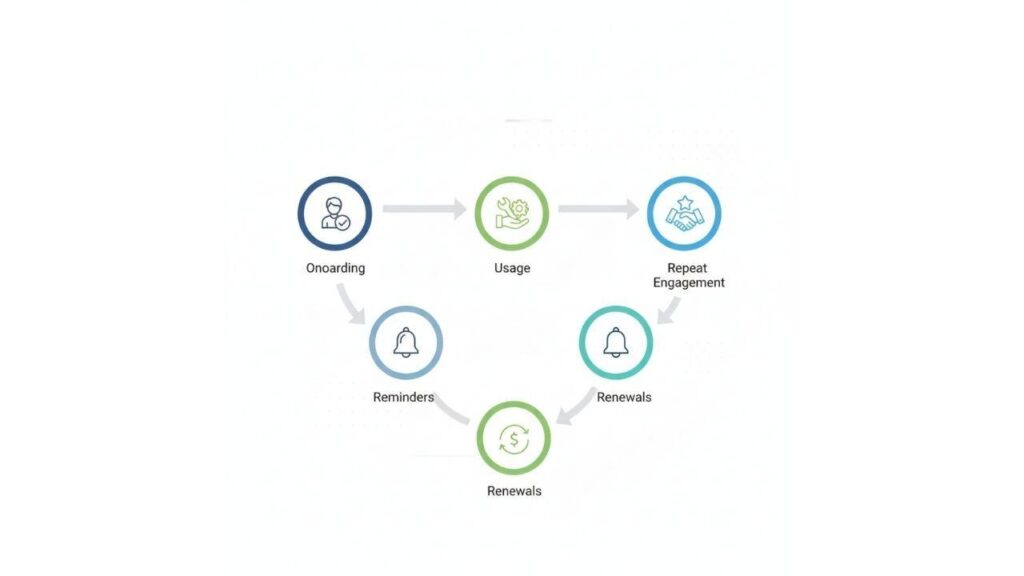
Lifecycle or Journey Mapping for the Industry
In the cosmetics, skincare, and personal care space, customer value is created over time, not at the moment of first purchase. This makes lifecycle and journey mapping a non-negotiable foundation for effective WhatsApp Automation for Cosmetics, Skincare & Personal Care industry.
Without clear lifecycle stages, brands treat all customers the same—and that is where retention breaks down.
Why Lifecycle Mapping Matters in This Industry
Skincare and personal care products are rarely standalone purchases. Customers follow:
- Morning and night routines
- Multi-step regimens
- Seasonal product changes
- Skin-concern-driven usage patterns
Yet most brands fail to map where a customer is in their journey. As a result:
- First-time buyers are pushed offers too early
- Loyal customers receive generic reminders
- Inactive customers are ignored until it’s too late
Lifecycle mapping ensures that each WhatsApp interaction matches the customer’s current reality.
Core Lifecycle Stages for Cosmetics & Personal Care Brands
A practical lifecycle model for this industry includes:
- First-Time Buyer
Customer has completed their first purchase and is learning how to use the product. - Active Usage Phase
Product is being consumed. This is the trust-building window where education matters more than promotion. - Replenishment Due Window
Product is nearing completion based on quantity and typical usage. - Repeat Purchase Stage
Customer replenishes or expands their routine. - Routine Expansion or Loyalty Phase
Customer explores complementary products and higher-value routines. - Inactive or At-Risk Stage
Customer misses expected replenishment and shows signs of churn.
Each stage requires a different tone, message type, and timing on WhatsApp.
Mapping Journeys to Lifecycle Stages
Once lifecycle stages are defined, WhatsApp journeys become structured and intentional:
- First-time buyers receive post-purchase guidance and usage tips
- Active users receive light-touch routine support
- Replenishment-stage customers receive timely reminders
- Repeat buyers receive loyalty acknowledgment
- At-risk customers receive gentle win-back nudges
This prevents over-communication and ensures relevance.
Why Lifecycle Mapping Improves WhatsApp Performance
For WhatsApp Automation for Cosmetics, Skincare & Personal Care industry, lifecycle-based journeys lead to:
- Higher message open rates
- Better customer trust
- Lower opt-out rates
- Stronger repeat purchase behavior
Customers don’t feel marketed to—they feel supported.
By grounding automation in lifecycle logic, brands shift from broadcast marketing to relationship management, which is essential in a category driven by trust, routine, and long-term usage.
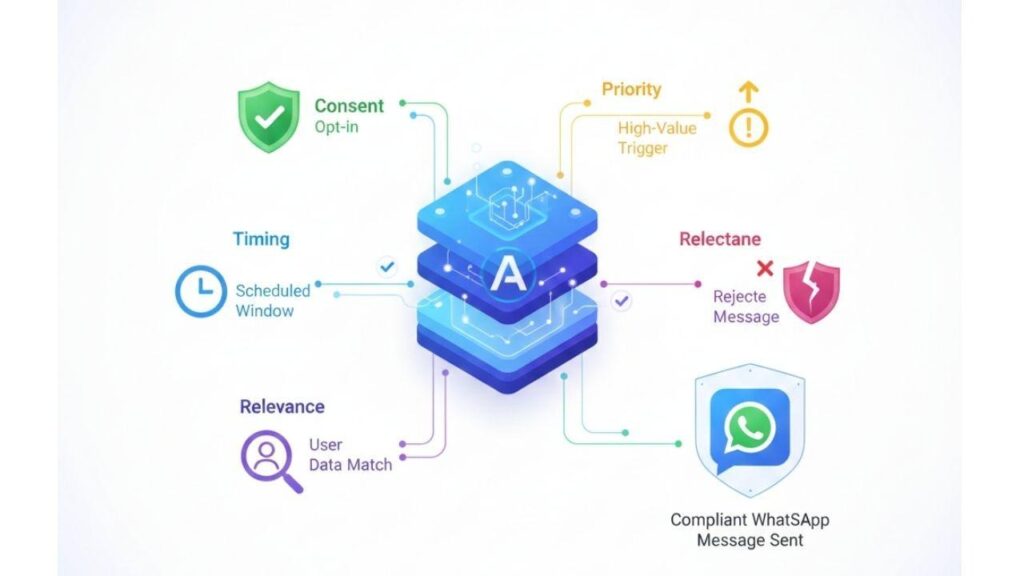
Automation Logic & Messaging Prioritization
One of the biggest risks with WhatsApp engagement in the cosmetics and personal care space is over-communication. When messages are sent without logic, prioritization, or timing control, WhatsApp quickly turns from a helpful channel into an intrusive one.
This is why automation logic is the backbone of effective WhatsApp Automation for Cosmetics, Skincare & Personal Care industry.
Why Messaging Logic Is Critical on WhatsApp
WhatsApp is a personal, high-attention channel. Customers do not expect frequent promotional messages here. Unlike email, there is little tolerance for noise.
Without clear automation logic:
- Customers receive messages at irrelevant times
- Multiple messages collide in short windows
- Promotional content overrides important utility updates
- Opt-out rates increase
- WhatsApp account quality is put at risk
Automation must therefore decide if, when, and what to send—before any message goes out.
Core Decision Checks Before Sending Any Message
For every automated WhatsApp message, the system evaluates:
- Customer consent status
Ensures messages are sent only to opted-in users. - Quiet hours and time zone
Prevents messages from being delivered at inappropriate times. - Frequency caps
Limits how often a customer can receive non-utility messages. - Lifecycle relevance
Confirms the message matches the customer’s current journey stage. - Transaction context
Validates that the message is anchored to a real purchase or event.
This ensures automation behaves more like a thoughtful human assistant than a marketing robot.
Message Priority Order That Protects Trust
For WhatsApp Automation for Cosmetics, Skincare & Personal Care industry, message prioritization typically follows this order:
- Utility messages
Invoice sharing, payment confirmations, delivery updates. - Replenishment and service messages
Usage-based reminders tied to product lifecycle. - Routine education and support
How-to-use guidance, routine completion tips. - Promotional or cross-sell messages
Only when contextually relevant and permitted.
If a customer is eligible for multiple messages, lower-priority messages are delayed or suppressed to avoid overload.
The Result: Respectful, High-Signal Communication
With proper automation logic in place:
- Customers receive fewer but more relevant messages
- WhatsApp becomes a trusted support channel
- Engagement rates improve organically
- Promotions perform better because they are timely
In the cosmetics and personal care category, trust directly influences repeat purchases. Messaging logic ensures that WhatsApp automation protects that trust instead of eroding it.
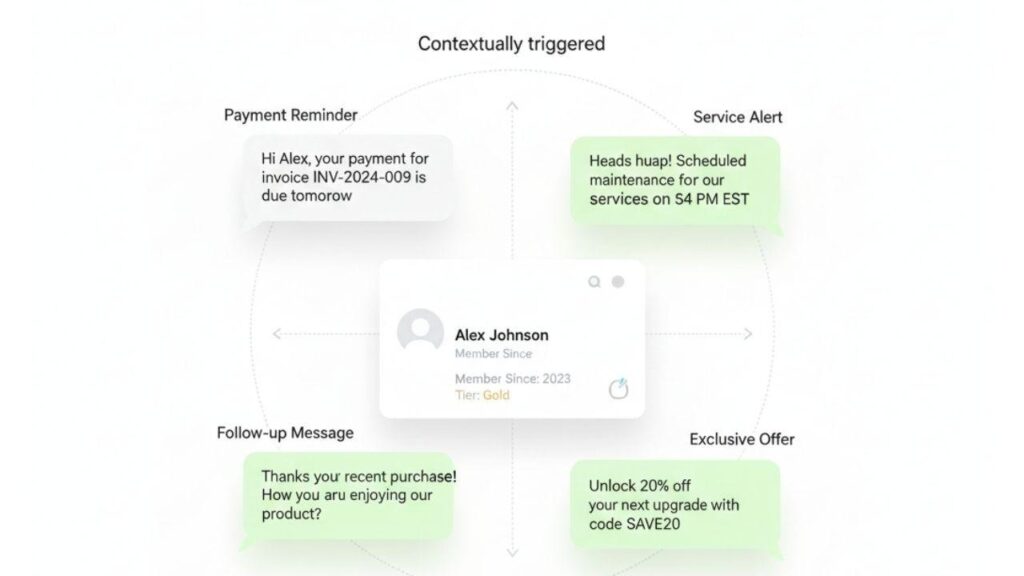
Automated Journeys & Message Types
Once lifecycle stages and automation logic are clearly defined, WhatsApp Automation for Cosmetics, Skincare & Personal Care industry comes to life through well-structured automated journeys. These journeys are not random campaigns—they are predefined response paths triggered by real customer behavior and product usage.
Each journey serves a specific purpose and aligns with how customers actually interact with personal care products.
Transaction Confirmation & Post-Purchase Assurance
The first automated journey begins immediately after purchase.
This message confirms:
- The successful transaction
- Invoice or order details
- Brand reassurance and trust
For cosmetics brands, this moment is critical. It sets expectations and establishes a reliable communication channel on WhatsApp. Customers feel confident that the brand is accessible and responsive.
Product Usage & Routine Education
After confirmation, customers often have questions:
- How should I use this product?
- How often should it be applied?
- Can it be combined with other products?
Automated usage and routine education messages address these questions proactively. Instead of promotional content, customers receive value-driven guidance, which is especially important for skincare routines where misuse can lead to dissatisfaction.
This journey strengthens trust during the most sensitive phase—product usage.
Replenishment & Restock Reminders
Replenishment reminders are the backbone of WhatsApp Automation for Cosmetics, Skincare & Personal Care industry.
These messages are triggered when:
- The product is nearing the end of its expected usage period
- The customer has not reordered within the predicted window
Because these reminders are tied to actual purchase quantity and timing, they feel helpful rather than sales-driven. Customers often perceive them as a convenience rather than marketing.
Payment Reminders for Pending Invoices
For brands offering partial payments, COD, or offline settlements, automated payment reminders play a crucial role.
Instead of manual follow-ups:
- Customers receive polite, invoice-linked reminders
- Payment context is clear and specific
- Resolution happens faster without staff intervention
This improves cash flow while maintaining a professional customer experience.
Cross-Sell & Routine Expansion Journeys
Once a customer shows repeat behavior, automation introduces routine-based cross-sell, not random upselling.
For example:
- A cleanser user receives a moisturizer recommendation
- A sunscreen buyer receives after-sun care suggestions
- A haircare buyer receives routine completion options
These messages are effective because they are contextually logical, not promotional blasts.
Feedback, Reviews & Engagement Prompts
After product usage or repeat purchases, feedback journeys are triggered to:
- Collect product reviews
- Measure satisfaction
- Identify unhappy customers early
This allows brands to address issues before churn occurs and improves long-term brand perception.
Win-Back Journeys for Inactive Customers
If a customer misses an expected replenishment cycle, a win-back journey is activated.
Instead of aggressive discounting, these messages:
- Acknowledge the gap
- Reintroduce the product value
- Invite the customer back gently
This approach respects the relationship while reactivating dormant customers.
Why These Journeys Work Together
Each journey is designed to:
- Solve a specific customer need
- Match a lifecycle stage
- Respect WhatsApp communication norms
Together, they form a cohesive engagement system, not disconnected campaigns. This is what makes WhatsApp Automation for Cosmetics, Skincare & Personal Care industry sustainable, scalable, and customer-friendly.
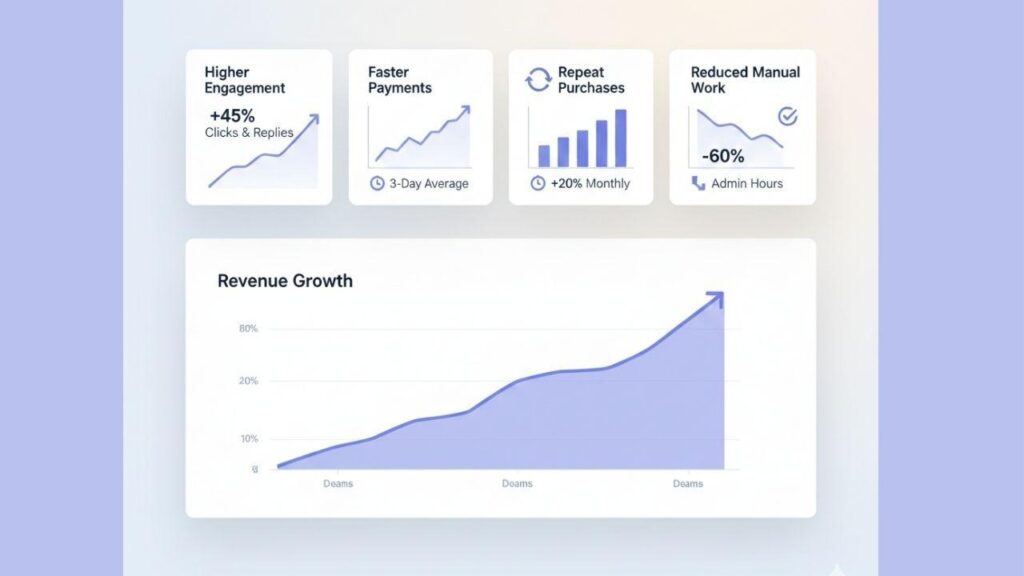
Impact & Measurable Outcomes
The effectiveness of WhatsApp Automation for Cosmetics, Skincare & Personal Care industry is best measured not by message volume, but by business outcomes. When automation is driven by invoice intelligence and lifecycle logic, the impact becomes both visible and quantifiable across marketing, operations, and revenue.
Higher Repeat Purchase Rates Without Over-Discounting
One of the most immediate outcomes brands experience is a significant increase in repeat purchases. Because replenishment reminders are timed to actual product usage, customers reorder naturally—without waiting for a sale.
Instead of training customers to buy only on discounts, brands:
- Re-engage customers at the moment of need
- Maintain pricing integrity
- Build habit-based purchasing
This directly improves customer lifetime value.
Improved Replenishment Adherence
Skincare and personal care products deliver results only when used consistently. Automated, usage-based reminders help customers stay on track with their routines.
As a result, brands see:
- Fewer missed replenishment cycles
- Higher routine completion rates
- Stronger customer satisfaction
Customers who see results are more likely to stay loyal and explore additional products.
Reduced Manual Workload for Teams
Before automation, teams spend hours:
- Preparing customer lists
- Segmenting audiences manually
- Sending follow-ups individually
- Tracking responses across tools
With WhatsApp Automation for Cosmetics, Skincare & Personal Care industry, these tasks are eliminated. Invoice-driven automation handles segmentation, timing, and delivery automatically, allowing teams to focus on strategy rather than execution.
Faster Recovery of Unpaid or Partial Payments
Automated, invoice-linked payment reminders lead to:
- Faster resolution of pending payments
- Fewer manual follow-ups
- Clear audit trails for finance teams
Customers respond better when reminders are contextual and specific, rather than generic nudges.
Stronger Engagement Metrics
Because messages are relevant and timely, brands consistently observe:
- Higher read rates
- Better click-through rates
- Increased conversion from WhatsApp journeys
Customers are more likely to engage when messages align with their actual purchase behavior.
Better Customer Experience and Brand Trust
Perhaps the most valuable outcome is improved customer perception. Automation that respects timing, relevance, and consent feels supportive rather than intrusive.
This leads to:
- Lower opt-out rates
- Higher brand trust
- Stronger long-term relationships
In a category driven by trust and results, this advantage compounds over time.
Predictable, Sustainable Growth
When repeat behavior, replenishment, and engagement are automated intelligently, growth becomes predictable rather than campaign-dependent.
That is the true impact of WhatsApp Automation for Cosmetics, Skincare & Personal Care industry, measurable ROI without sacrificing customer experience.
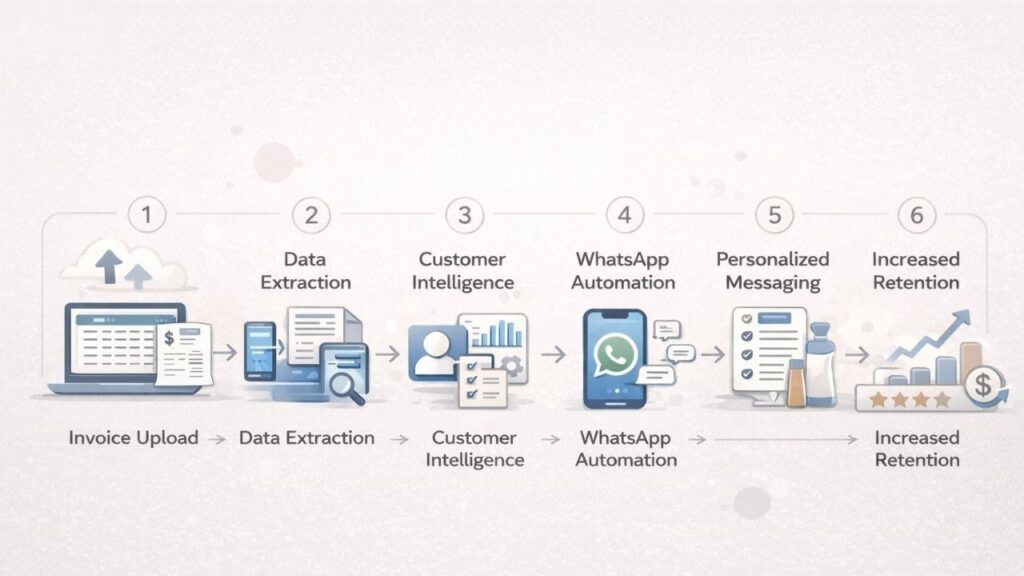
End-to-End Engagement Flow
To truly understand how WhatsApp Automation for Cosmetics, Skincare & Personal Care industry works in practice, it’s important to look at the end-to-end engagement flow—from the moment a purchase happens to the moment a customer repeats, upgrades, or re-engages.
This flow is what transforms automation from a collection of messages into a repeatable growth system.
Step 1: A Real Business Event Occurs
Everything starts with an actual customer action:
- A skincare or personal care product is purchased
- An invoice is generated at checkout
- The customer receives the bill digitally or physically
This is a confirmed transaction, not an inferred signal. The system reacts only to what truly happened.
Step 2: Invoice Collection Without Workflow Change
The invoice is shared with the automation system through:
- WhatsApp invoice upload
- PDF upload via portal
- Bulk invoice import
No new software is introduced. No staff behavior changes. This ensures high adoption and zero operational friction.
Step 3: Data Extraction & Structuring
Once the invoice is received, the system extracts:
- Customer identity and contact details
- Product names and categories
- Quantity and pack size
- Purchase date and order value
- Payment status
Unstructured invoice data is converted into structured, usable intelligence that systems can act upon.
Step 4: Customer Profiling & Lifecycle Placement
Using extracted data, the customer is:
- Identified as new or returning
- Mapped to a lifecycle stage
- Associated with product usage timelines
- Evaluated for replenishment probability
This step ensures the customer is not treated as a generic contact, but as an individual with a specific context.
Step 5: Message Eligibility & Compliance Checks
Before any WhatsApp message is sent, the system checks:
- Customer consent status
- Quiet hours and local time
- Frequency caps
- Message priority (utility vs promotional)
This protects customer trust and maintains WhatsApp policy compliance.
Step 6: Automated WhatsApp Journey Execution
Once eligible, the appropriate WhatsApp journey is triggered:
- Invoice confirmation
- Usage guidance
- Replenishment reminder
- Payment follow-up
- Cross-sell or win-back message
Each message is personalized using invoice data and lifecycle context.
Step 7: Engagement Tracking & Feedback Loop
Every interaction is tracked:
- Message delivered
- Message read
- Link clicked
- Payment completed
- Repeat purchase made
This feedback continuously updates the customer profile and improves future automation decisions.
Step 8: Continuous Optimization
Over time, the system learns:
- When customers respond best
- Which messages drive repeat purchases
- Which segments need fewer or more touchpoints
Automation becomes smarter with every transaction.
Why This Flow Matters
This end-to-end engagement flow ensures that WhatsApp Automation for Cosmetics, Skincare & Personal Care industry is:
- Event-driven, not campaign-driven
- Automated, not manual
- Respectful, not intrusive
- Scalable, not fragile
Most importantly, it ensures that every WhatsApp message has a clear reason to exist.
Recent Posts




Review Case Study: WhatsApp Automation & Invoice Intelligence for Cosmetics, Skincare & Personal Care Brands.